


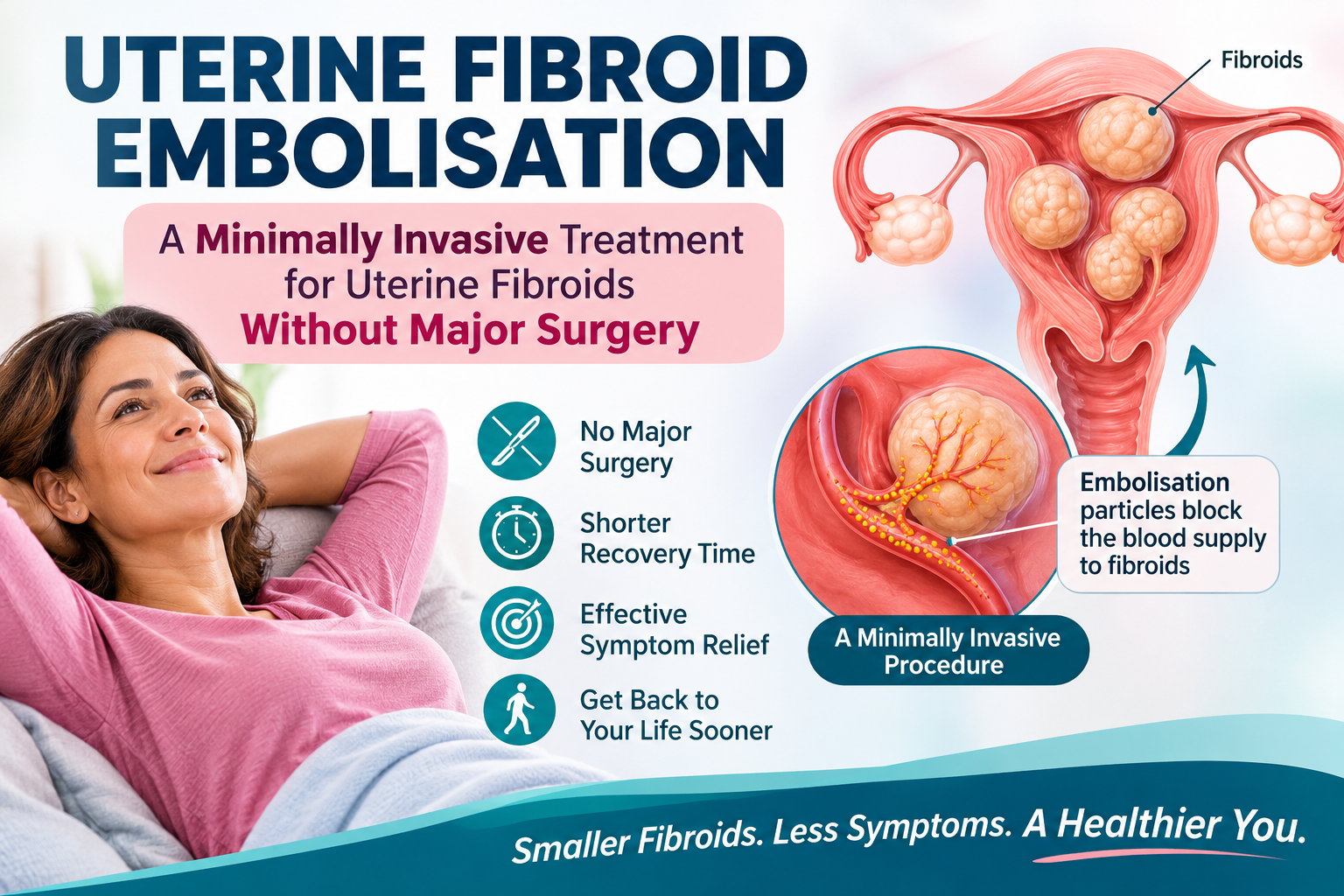
UTERINE FIBROID EMBOLISATION
11-11-2026
UTERINE FIBROID EMBOLISATION (UFE)
A Minimally Invasive Treatment for Uterine Fibroids Without Major Surgery
Written by Dr. Thoufiq Ali. M
Interventional Radiologist, KIMS Health Alshifa, Perinthalmanna
Introduction: Understanding Uterine Fibroids
Uterine fibroids are among the most common gynaecological conditions affecting women, particularly during their reproductive years. These are non-cancerous growths that develop in or around the uterus. Although many women with uterine fibroids may not experience any symptoms, others can suffer from heavy menstrual bleeding, severe period pain, pelvic discomfort, abdominal swelling and frequent urination.
For women experiencing these symptoms, uterine fibroids can significantly affect their physical health, daily activities and overall quality of life. Traditionally, surgery has been one of the primary treatment options. However, advancements in medical technology have introduced a minimally invasive alternative known as Uterine Fibroid Embolisation (UFE), also called Uterine Artery Embolisation (UAE).
This advanced interventional radiology procedure offers an effective treatment option for suitable patients, helping to shrink fibroids without surgically removing the uterus.
What Are the Common Symptoms of Uterine Fibroids?
The symptoms of uterine fibroids depend on their size, number and location within the uterus. Some women remain completely asymptomatic, while others may experience:
- Heavy or prolonged menstrual bleeding.
- Severe menstrual cramps and pelvic pain.
- Lower abdominal pressure or discomfort.
- Frequent urination due to pressure on the urinary bladder.
- Constipation or difficulty passing stools.
- Abdominal enlargement or bloating.
- Anaemia due to excessive menstrual blood loss.
- Discomfort or pain during sexual intercourse.
Women experiencing persistent heavy menstrual bleeding, unexplained anaemia or pelvic discomfort should consult a gynaecologist for proper evaluation.
What Is Uterine Fibroid Embolisation (UFE)?
Uterine Fibroid Embolisation is a minimally invasive, image-guided procedure performed by a specialist Interventional Radiologist to treat symptomatic uterine fibroids.
Unlike conventional surgery, UFE does not require a major surgical incision or the removal of the uterus. The procedure works by blocking the blood vessels that supply nutrients and oxygen to the fibroids. As the blood supply is reduced, the fibroids gradually shrink, resulting in improvement in associated symptoms.
One of the major advantages of UFE is that it offers a uterus-preserving treatment option for women who wish to avoid major surgery, provided they are suitable candidates for the procedure.
How Is the UFE Procedure Performed?
Uterine Fibroid Embolisation is performed under imaging guidance in a specialised Interventional Radiology suite. The procedure generally involves the following steps:
- Initial Evaluation: The patient undergoes clinical assessment and appropriate imaging investigations, such as ultrasound and MRI, to evaluate the size, number and location of the fibroids.
- Small Access Point: Under local anaesthesia, a tiny puncture is made, usually in the wrist or groin, to access a blood vessel.
- Catheter Guidance: A thin, flexible tube called a catheter is carefully guided through the blood vessels towards the uterine arteries under X-ray guidance.
- Blocking the Blood Supply: Special medical-grade embolic particles are injected through the catheter to block the small blood vessels supplying the fibroids.
- Completion of Treatment: Once the targeted blood supply is successfully blocked, the catheter is removed and the small access site is treated.
Over the following weeks and months, the fibroids gradually shrink as their blood supply is interrupted, helping to relieve symptoms.
What Are the Benefits of Uterine Fibroid Embolisation?
UFE has emerged as an important alternative to conventional surgical treatment for appropriately selected women with symptomatic uterine fibroids. Some of its key benefits include:
- Minimally Invasive Treatment: The procedure requires only a tiny puncture rather than a major surgical incision.
- Preserves the Uterus: UFE treats fibroids without surgically removing the uterus, making it an important option for women who wish to retain their uterus.
- No Major Surgery: It offers an alternative to procedures such as hysterectomy and, in selected cases, myomectomy.
- Treats Multiple Fibroids: Multiple fibroids can often be treated during a single procedure.
- Shorter Recovery Period: Compared with major abdominal surgery, patients generally experience a shorter hospital stay and faster return to routine activities.
- Improvement in Symptoms: Many women experience significant improvement in heavy menstrual bleeding, pelvic pressure, pain and urinary symptoms following treatment.
UFE vs. Conventional Fibroid Surgery: What Is the Difference?
Women diagnosed with uterine fibroids often have concerns about whether they need surgery. Understanding the available treatment options is important before making a decision.
Conventional surgical options include myomectomy, which removes fibroids while preserving the uterus, and hysterectomy, which involves removal of the uterus.
Uterine Fibroid Embolisation provides another treatment approach. Instead of surgically removing the fibroids, it blocks their blood supply, allowing them to shrink naturally over time.
The choice between UFE, myomectomy, hysterectomy and medical management depends on several factors, including the patient's age, symptoms, fibroid characteristics, overall health and future pregnancy plans.
Is Uterine Fibroid Embolisation Suitable for Women Planning Pregnancy?
This is one of the most important questions women ask when considering UFE.
UFE preserves the uterus, but its effects on future fertility and pregnancy outcomes are not fully established. Women who wish to become pregnant in the future should discuss all available treatment options with their gynaecologist and Interventional Radiologist before proceeding.
A personalised assessment is essential to determine whether UFE or an alternative treatment, such as myomectomy, would be more appropriate.
Recovery After Uterine Fibroid Embolisation
Recovery following UFE is generally faster than after major abdominal surgery. Some patients may be discharged on the same day, while others may require an overnight hospital stay, depending on their clinical condition.
Mild to moderate abdominal cramps, pelvic discomfort, nausea, fatigue and low-grade fever may occur in the initial days following the procedure. These symptoms can generally be managed with prescribed medications and supportive care.
Most patients gradually return to their normal activities within approximately one week, although recovery varies from person to person.
The shrinkage of fibroids and improvement in symptoms occur gradually over the following weeks and months. Regular clinical follow-up and imaging may be recommended to assess the treatment response.
Are There Any Risks Associated with UFE?
Like every medical procedure, UFE has certain potential risks and complications. These may include post-procedure pain, infection, bleeding at the access site, passage of fibroid tissue and, rarely, damage to the uterus or surrounding blood vessels.
There is also a possibility of changes in ovarian function, particularly in women approaching menopause.
A detailed consultation and appropriate investigations help identify suitable candidates and minimise potential risks. Patients should understand both the benefits and limitations of the procedure before making a treatment decision.
Advanced Uterine Fibroid Treatment at KIMS Health Alshifa, Perinthalmanna
With advancements in Interventional Radiology, women now have access to minimally invasive treatment options for several conditions that traditionally required major surgery.
At KIMS Health Alshifa, Perinthalmanna, the Interventional Radiology Department offers specialised image-guided treatment approaches. Uterine Fibroid Embolisation represents an important advancement in women's healthcare, providing a uterus-preserving alternative for suitable patients diagnosed with symptomatic uterine fibroids.
Under the guidance of experienced specialists, patients can receive individualised evaluation and treatment planning based on their medical condition and healthcare needs.
Women experiencing heavy menstrual bleeding, persistent pelvic pain or other symptoms associated with uterine fibroids should seek medical advice rather than allowing the condition to affect their quality of life.
Uterine fibroids do not always mean major surgery. Explore your treatment options and consult a specialist to understand whether Uterine Fibroid Embolisation is right for you.

Dr. Thoufiq Ali. M
Interventional Radiologist
KIMS Health Alshifa, Perinthalmanna
